Tianrui (Dennis) Wu

I study cosmology with statistical inference, scientific machine learning, and large survey simulations.

I am pursuing Physics and Mathematics at the University of Arizona and work with the Arizona Cosmology Lab on baryon acoustic oscillation reconstruction under photometric-redshift uncertainty.

My research builds forward models, Bayesian inference pipelines, and scientific machine-learning systems for next-generation surveys including Roman, Rubin, and SPHEREx.

Prior work at Caltech and Duke focused on power-spectrum reconstruction, weak lensing, survey synergies, and distance-ladder calibration.

2026+

Arizona Cosmology Lab · 2026–present

  • Question. Measure how photometric-redshift smearing changes the value of baryon acoustic oscillation reconstruction.
  • Data. Simulated galaxy catalogs and Monte Carlo ensembles for Roman and Rubin-like survey conditions.
  • Built. Designed the analysis, forward-model framework, covariance cross-checks, and Bayesian inference pipeline.
  • Result. Reduced an inference bias by four to six times and mapped where a 20–40% precision benefit becomes statistically insignificant.

2024

SPHEREx Team, Caltech · 2024

  • Question. Recover galaxy power spectra after instrument window functions distort the observed signal.
  • Data. Lognormal mock catalogs with realistic SPHEREx survey masks.
  • Built. Built the ResUNet model, mock-data pipeline, distributed training workflow, and analytic validation baselines.
  • Result. Achieved sub-percentage prediction error on validation data.
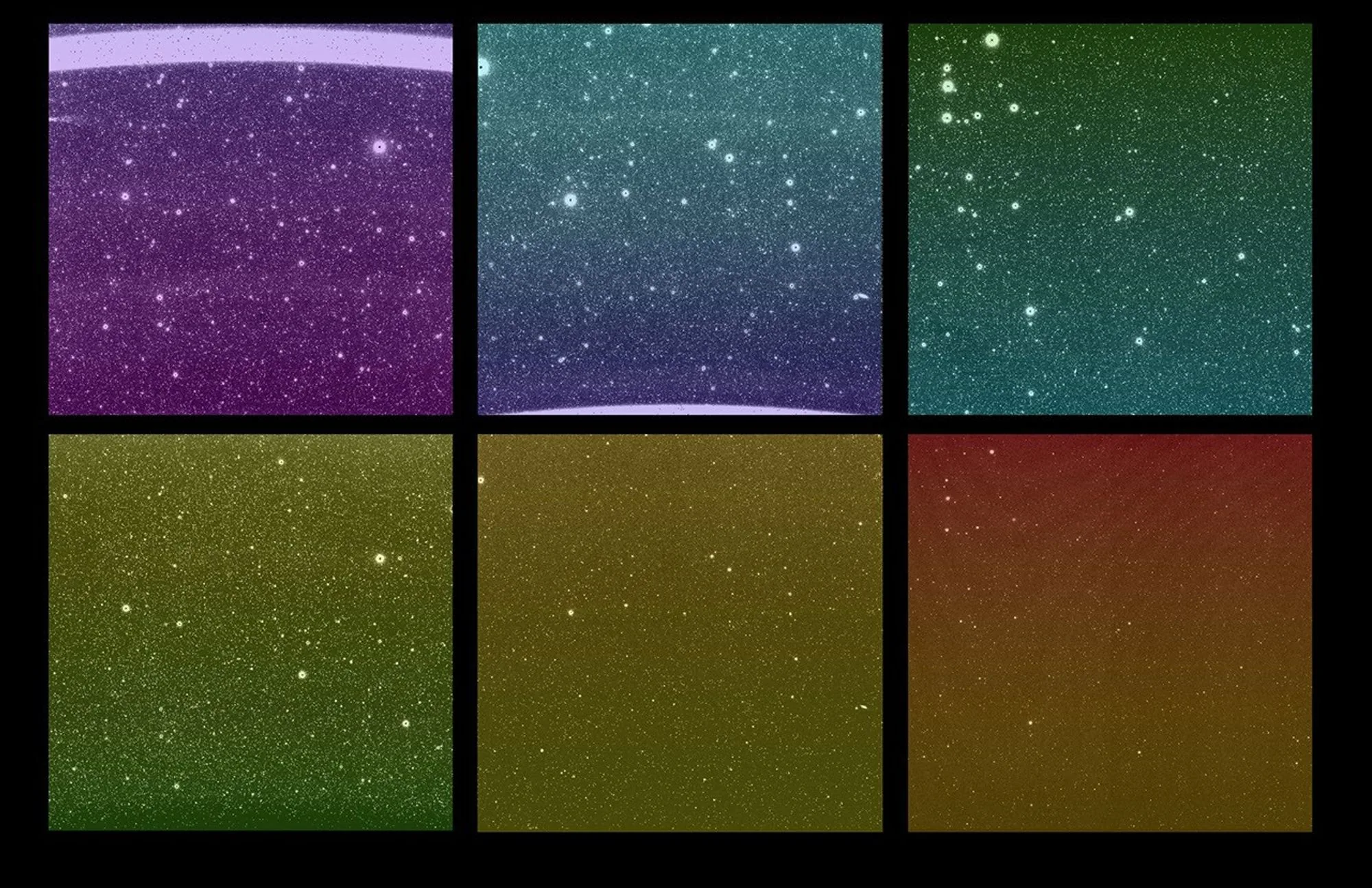
Six infrared detector views from a SPHEREx first-light exposure
One of SPHEREx’s first detector exposures. Image: NASA/JPL-Caltech.
2022–24

Duke Cosmology Group · 2022–2024

  • Question. Combine space- and ground-based survey information while testing cosmological calibration methods.
  • Data. Roman and Rubin simulations totaling 120 TB plus synthetic stellar catalogs.
  • Built. Built two-point correlation, MCMC inference, photometric-redshift, and stellar-catalog pipelines.
  • Result. Evaluated methods that increased the reported Figure of Merit by 20% and contributed to two publications.
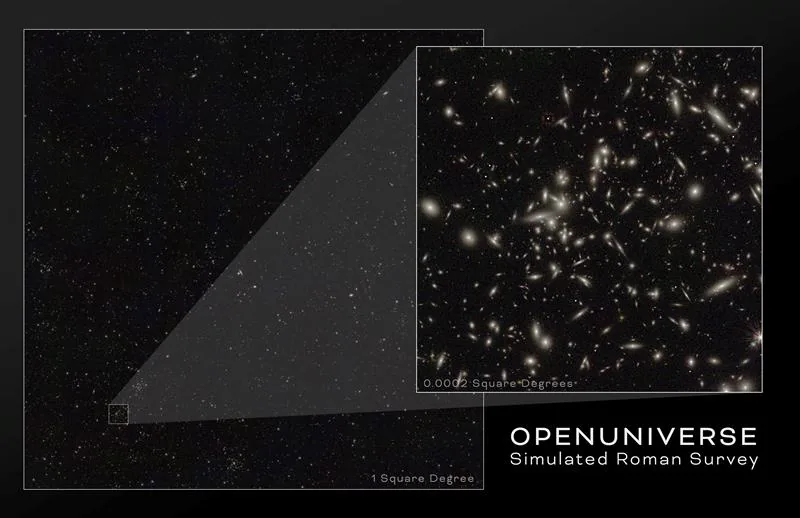
A simulated Roman Space Telescope field from OpenUniverse2024
A simulated Roman field from OpenUniverse2024. Image: NASA Goddard and M. Troxel.
2021–27

Physics, mathematics, teaching, and leadership

I am pursuing a double major in Physics and Mathematics at the University of Arizona, following prior study and research at Duke University.

The complete education, teaching, service, leadership, and recognition record is preserved in the downloadable academic CV.

Duke University Society of Physics Students Stargazing Devils American Physical Society
Background imagery: JWST Cosmic Cliffs and Pillars of Creation. NASA, ESA, CSA, and STScI.